Recently I’ve been reading “The Book Of Negroes” by Lawrence Hill, I’ve been enjoying it. So today I will analyse the book through a ‘Readers Response’ Lens.
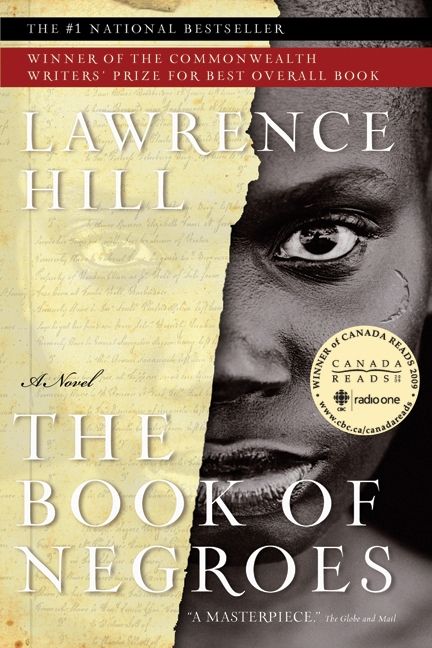
When I began reading “The Book Of Negroes” written by Lawrence Hill, I thought the story was just going to take place primarily in Africa, then end in London. It gave the appearance of just the life of a calm African woman named Aminata Diallo, whose village was raided and had to survive in the barren desert-scape. All of this seemed quite rather uninteresting to me.
Yet, I kept reading and I am glad I did, because after the gruesomely detailed capture and transport of Aminata, the story got interesting with various ups and downs instead of just being always in conflict. The story is very realistic and descriptive. Thus, I was able to relate to Aminata’s struggles when she is being relocated even though I had never experienced being rounded up. This story is an excellent depiction of the slave trade.
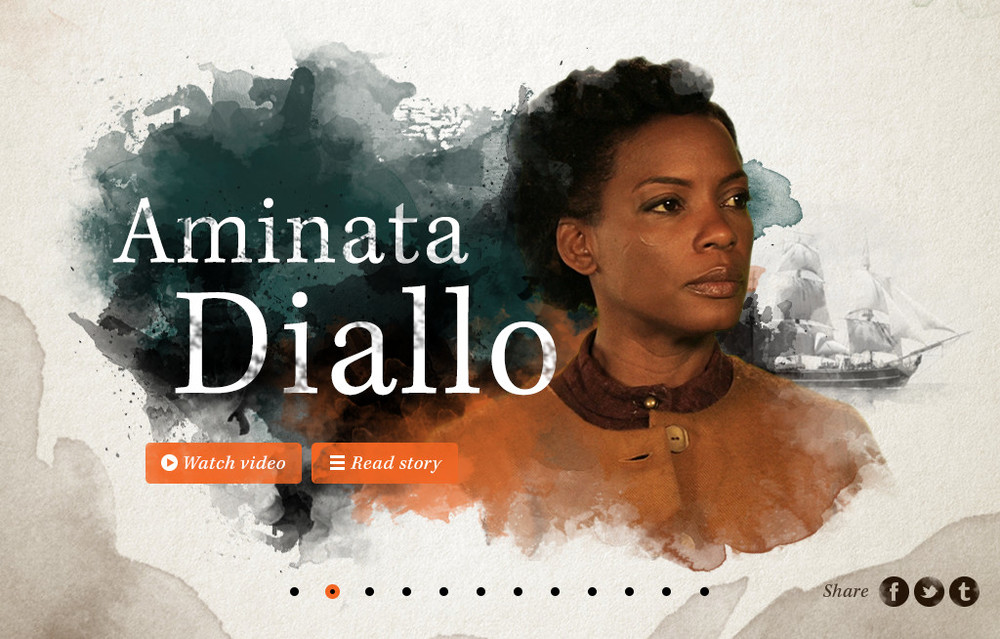
Additionally, I didn’t give much notice to the title when I began reading, turns out the title is referencing the books Aminata writes to document her life. Writing may not seem all that interesting nowadays; nevertheless, writing or any indication of higher intelligence is something that was not allowed for a slave at that time. “‘But watch out, girl. You know too much, someone kill you'[Georgia said]” (Hill 143). Aminata wrote four books and they are represented as the four major turning points that section off the book; hence, the name of the title: “The Book Of Negroes”.
Although I did have the issue of Aminata being unrealistically capable and strong-willed at around the age of 8-10 years, and manages to shake off death almost immediately which has claimed so many lives: “‘You [Aminata] are one of the lucky ones,’ he [Chekura] said. ‘A big boat is waiting, and nearly full. All of you will be sold and will travel across the water in very short time.’ […] ‘Others will have been on that ship for moons. Dying, slowly, as it fills. But you will not have to wait.'” (Hill 50). I understand why Hill did so and gave Aminata plot armour to tell her tale. It is very improbable for someone at her age to travel the African desert for days, then get sick in a boat filled to the brim with people, faeces and disease, only to survive it all.
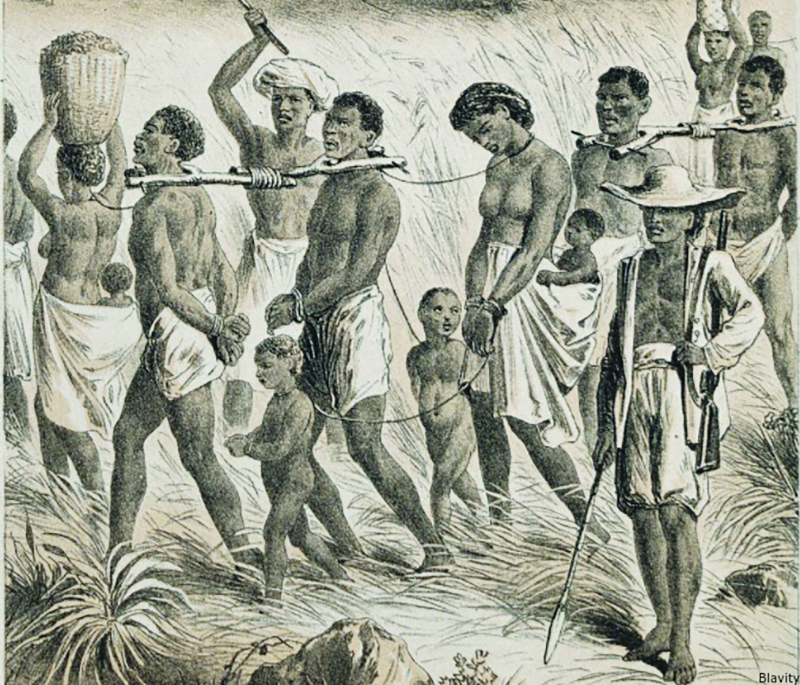
Furthermore, I found myself filling in gaps throughout my reading. Perhaps they were filled in later as Aminata grew up. The first gap I was filling was the religion that Aminata expresses and its implications elsewhere in the world. Islam is mentioned as the religion of her father, and all she knows comes from her father who died when Aminata was being transported. When she was captured she exclaimed: “‘This is a mistake’ I [Aminata] said. ‘I am a freeborn Muslim. Let me go!'” (Hill 25). By freeborn, she is referring to the idea that Muslims can’t take slaves nor become slaves.
Another gap was the use of the cycle of the moon as a calendar as opposed to the Georgian calendar. In Islam the lunar calendar is used in favour of the Georgian calendar, counting moons and marking the various states that the moon shows. “‘Baby soon,’ I [Aminata] said to the toubab inspector. ‘Baby when?’ he asked. ‘ One moon,’ I said.” (Hill 61). Instead of saying one day Aminata said one moon, that’s because she was taught to count the moons and remember each rain season she has experienced.
All in all, it was fun reading “The Book Of Negroes” and applying the Readers Response theory to it.
_________________________________________________
Works Cited
- Hill, Lawrence. The Book of Negroes. Atlantic Provinces Special Education Authority, Library, 2017.“Lawrence Hill Author.” Lawrence Hill, http://www.lawrencehill.com/.
- “The Book of Negroes.” Lawrence Hill, http://www.lawrencehill.com/the-book-of-negroes.
- (Photo) “The Book Of Negroes – Lawrence Hill – Paperback.” HarperCollins Canada, http://www.harpercollins.ca/9781554681563/the-book-of-negroes/.
- (Photo) “The Book of Negroes.” Mark Rozeluk, http://www.markrozeluk.com/bon.
- (Photo) “Oakland Post.” Post News Group, 22 Jan. 2018, postnewsgroup.com/2018/01/22/mellon-foundation-awards-nearly-1-5-million-slave-trade-database/.
 Ahmad's Blog Posts