Finishing this book was a treat. Oh man let me tell you all about it, but through the lens of an archetype-ist.
This will be my final blog post as seeing July is almost over and school is quickly approaching.
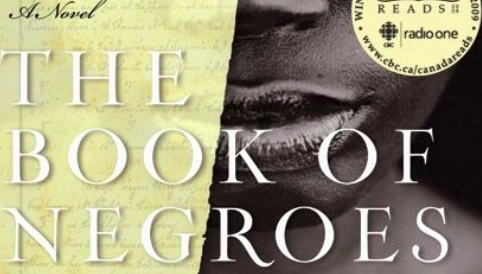
Lawrence Hill’s The Book of Negroes is, indisputably, a fascinating book filled with many emotional scenes and strongly defined characters. I can NOT express my feelings enough.
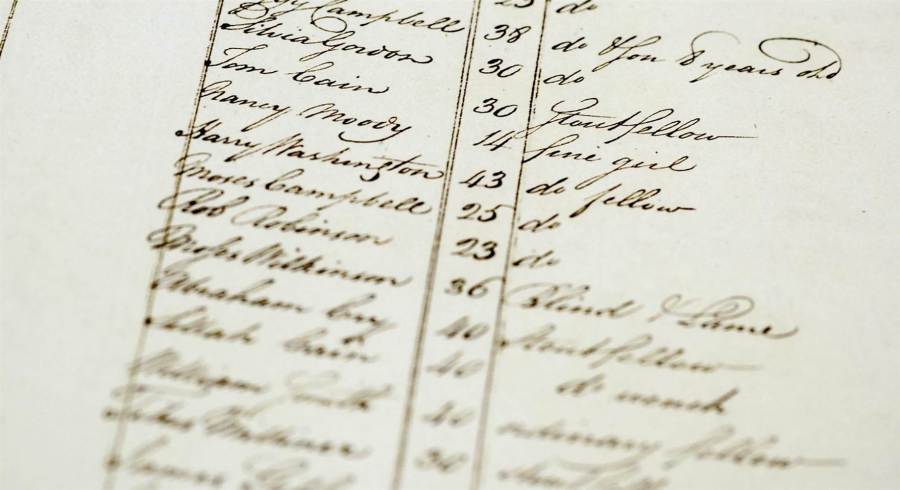
The story is based on a document called “The book of negroes”, which a list of black British loyalists who helped the British when the thirteen colonies wanted independence. How cool! Right?
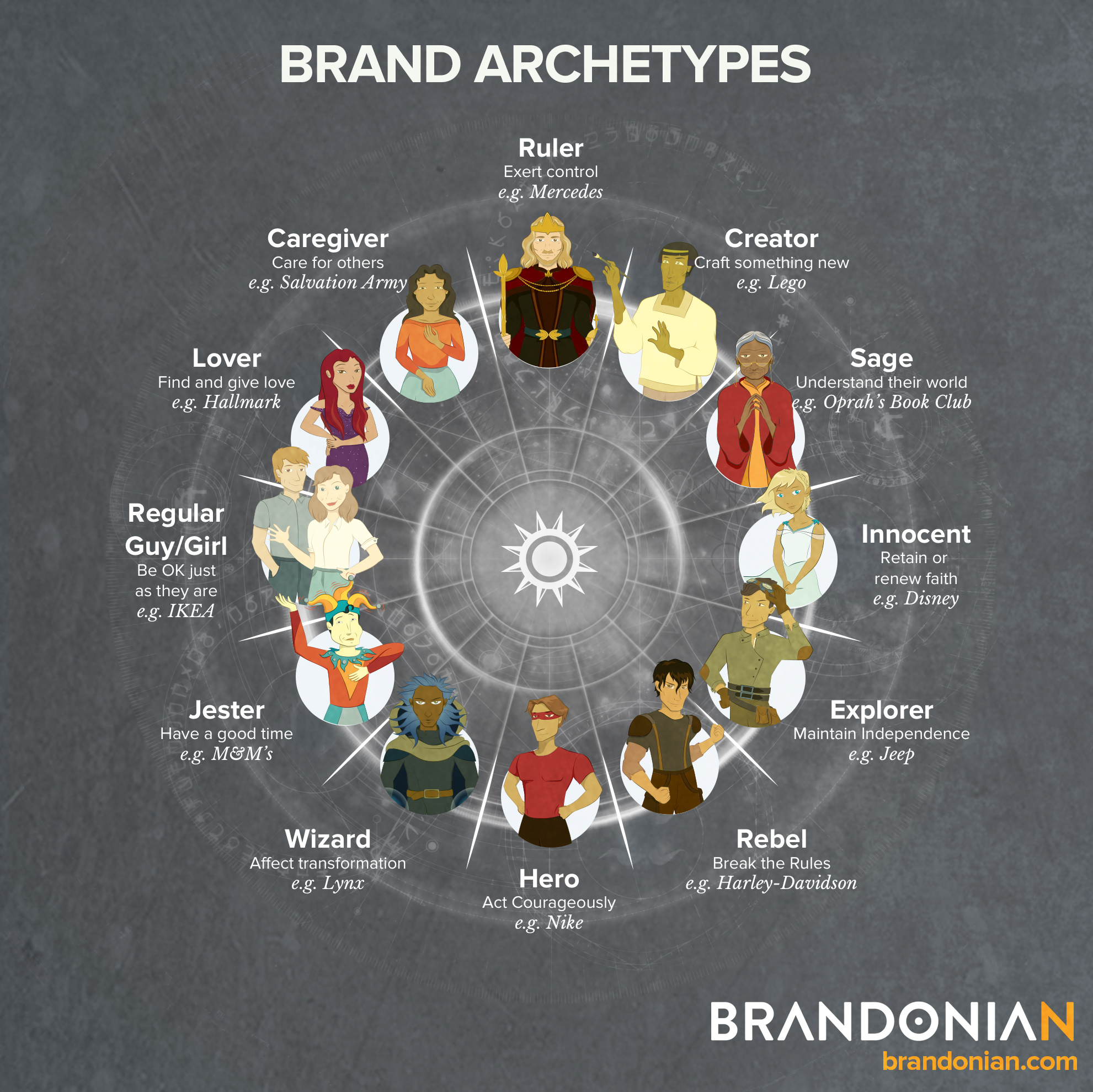
The book is eminently described by Carl Gustav Jung’s archetypal theory seeing as it follows Joseph Campbell’s “The Hero’s Journey”, it has recognizable cliche characters and it is filled with archetypes and symbols.
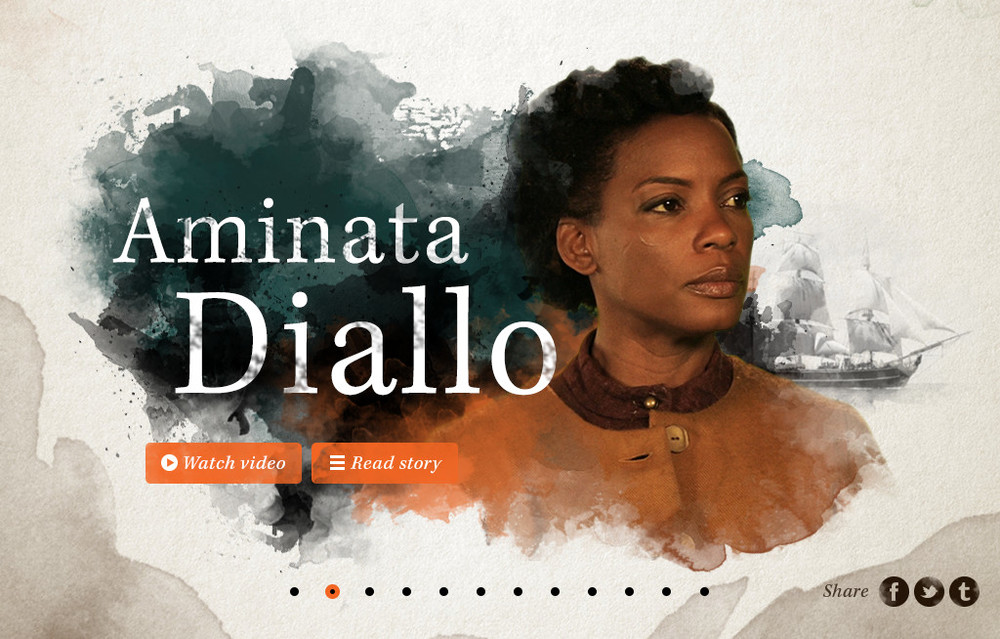
Aminata’s story follows Joseph Campbell’s “The Hero’s Journey” word to word. The story follows Aminata’s journey of self-discovery and identity crisis. Along the way, Aminata interacts and survives with many distinguishable characters who are vital for Aminata’s endurance and character development. Although, Aminata gets enslaved and finds freedom at the end; it, oddly enough, falls within the hero archetype.
Late into the book, Aminata faces her biggest task, her “approach”. Working with and trusting a slave-trader.
That’s right. Aminata Diallo, who was once a slave, trusts a her worst enemy. Aminata wished to travel back to her village in Bayo, and the only sure-fire way to get there is with a finely acquainted guide who is familiar with the land. The only people who fit this description are slave-traders.
The trek was long and cruel on Aminata’s aged body. As a result, she slowed down the group so much that they, not surprisingly, planned to resell her again into the slave business (Hill 439). This was her “crisis”. Aminata wins this “crisis” by escaping at night and reaching a village not far from the shore of Sierra Leone.
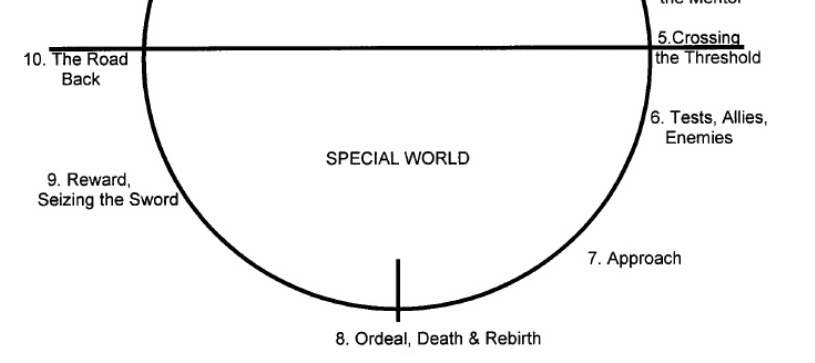
There she attains the “treasure” of being with a native village undisturbed by the slave-traders, re-living a simpler life independent from higher powers. All that time spent in the village makes Aminata realize that in order to evoke change, she must do it herself. So, she travels back to the coast on her own as the “return” and without rest crosses the waters once again for a “new life”, this time to the United Kingdom.
“And thus, I made one last discovery. It was almost impossible to get into Africa, but easy to be taken out” (Hill 447).
Then later for the “return with elixir”, Aminata writes down her life as a story to put an end to the slave-trading business. This is all a display of valiant, selfless acts from Aminata.
Onward to other archetypes. Georgia fills ‘The Great Mother’ archetype. Georgia is the first person Aminata trusts after her enslavement. Georgia grew up on the plantation field, giving her insight that Aminata doesn’t have.
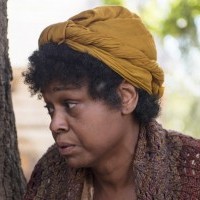
Georgia becomes the caretaker of Aminata and almost a second mother. Georgia protected and looked over Aminata, and taught her the language of the Negroes, how to bargain and what herbs are useful as medicine. Georgia also introduced Aminata to the “Fish Net” – a system for blacks to secretly connect, share and communicate with others across a wide range (Hill 141).
Georgia wanted the best for Aminata but knew her intellect can harm her: “‘But watch out, girl. You know too much, someone kill you’ [Georgia said]” (Hill 143). Georgia taught Aminata the lifestyle of slaves, just as Aminata’s mother taught Aminata the lifestyle of the villagers.
Finally, there are a bunch of symbols that Hill uses to tell the reader of a character’s fate without actually spelling it out for the reader. The crescent moon, for example, etched on Aminata’s face is also an archetype. Crescent moon is the symbol of change and transition. This happened so many times that Aminata acknowledges this saying “‘We [blacks] are travelling peoples, as you say so well, and you [Aminata] are one of the travellest of them all'” (Hill 319). Throughout the entire book, Aminata is constantly moving homes, towns and even Continents; not Knowing where home is, how sad!
_________________________________________________
Works Cited
- Barker, Danika. “Archetypal Literary Criticism.” Scribd, Scribd, http://www.scribd.com/document/253907931/Archetypal-Literary-Criticism.
- Hill, Lawrence. The Book of Negroes. Atlantic Provinces Special Education Authority, Library, 2017.“Lawrence Hill Author.” Lawrence Hill, http://www.lawrencehill.com/.
- (Photo) Barker, Danika. “Archetypal Literary Criticism.” Scribd, Scribd, http://www.scribd.com/document/253907931/Archetypal-Literary-Criticism.
- (Photo) “Brandonian Brand Archetypes.” Brandonian, brandonian.com/archetypes/what-are-brand-archetypes/attachment/brandonian-brand-archetypes/.
- (Photo) “Georgia – Characters – The Book of Negroes.” CBCnews, CBC/Radio Canada, http://www.cbc.ca/bookofnegroes/characters/georgia.
- (Photo) “The Book Of Negroes – Lawrence Hill – Paperback.” HarperCollins Canada, http://www.harpercollins.ca/9781554681563/the-book-of-negroes/.
- (Photo) “The Book of Negroes.” Mark Rozeluk, http://www.markrozeluk.com/bon.
- The 12 Common Archetypes, http://www.soulcraft.co/essays/the_12_common_archetypes.html.
- “The Book of Negroes.” Lawrence Hill, http://www.lawrencehill.com/the-book-of-negroes.
- Wiley, Moore. “Archetypes and Symbols.” Archetypesandsymbols, moorewiley.weebly.com/uploads/1/3/2/8/13284226/archetypes_and_symbols.pdf.
 Ahmad's Blog Posts